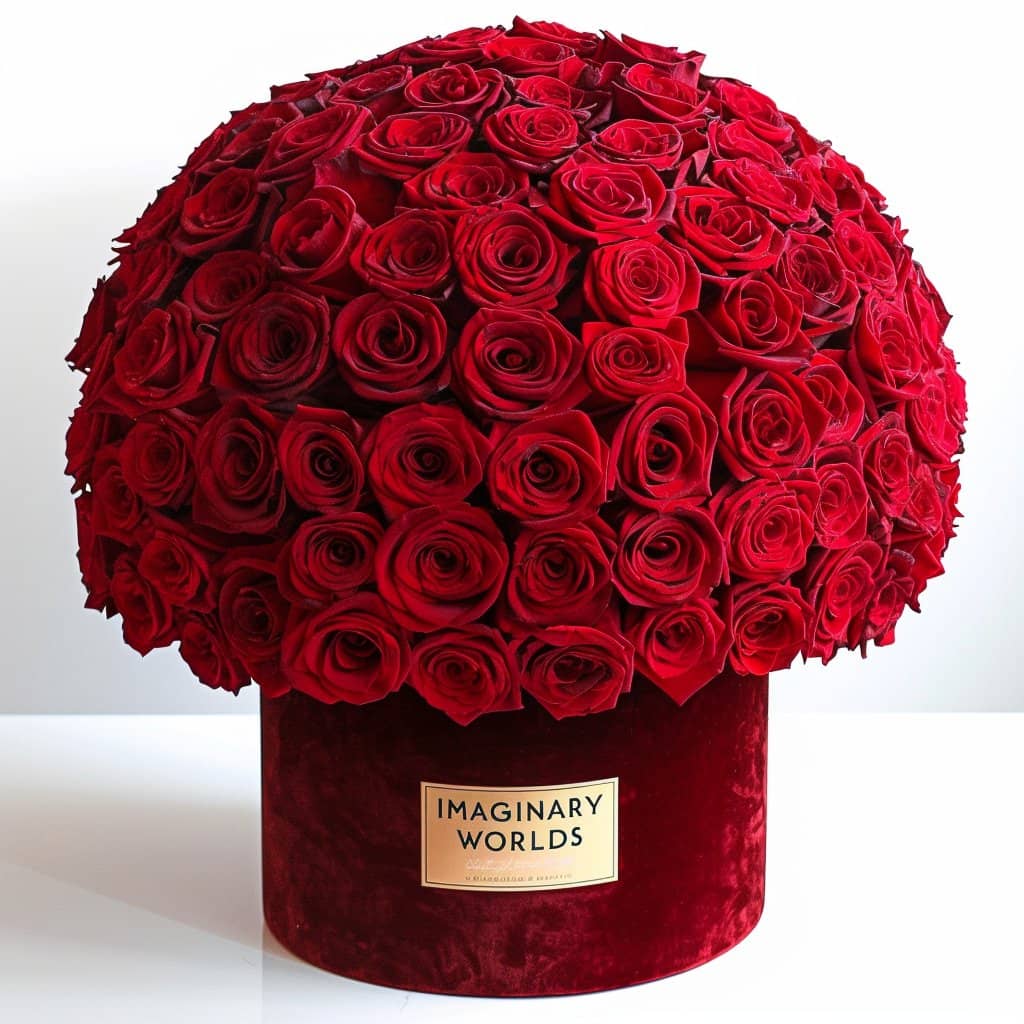
The point where botanical material is organized into an idea, a form, and an experience beyond the bouquet.
By Imaginary Worlds EditorialUpdated 2026-08-21
Floral Art · The IW Journal
Flowers become art not when someone simply declares them art, but when botanical material is used to develop an idea through deliberate choices. Composition establishes relationships. Color directs emotion and attention. Texture changes with distance. Scale places the viewer inside or outside the work. Setting and duration complete the experience.
A bouquet can achieve this, and a sculpture can fail to. The distinction is not size, price, preservation, or novelty by itself. It is whether the material, form, context, and meaning have been made coherent.
Flowers are already complex material
Every bloom carries geometry, scent, color, cultural association, and a visible relationship with time. Fresh flowers open and decline; dried flowers record contraction and fragility; preserved flowers retain a fuller form while aging more slowly. The artist or designer begins with these conditions rather than a blank substance.
Botanical variation prevents perfect repetition. That irregularity can be hidden, disciplined into rhythm, or made central. A surface of roses remains visually alive because the units are similar without being identical.
What transforms arrangement into an artistic proposition
Intention
A clear question, emotion, or idea guides decisions beyond making the flowers merely attractive.
Composition
Rhythm, balance, density, negative space, and focal points organize how the viewer encounters the whole.
Transformation
The flower may become surface, symbol, silhouette, light object, garment form, or spatial installation.
Context
A room, case, plinth, ceremony, photograph, or public setting changes what the floral form means.
Viewer experience
Distance, movement, memory, and time allow the work to reveal more than one immediate product view.
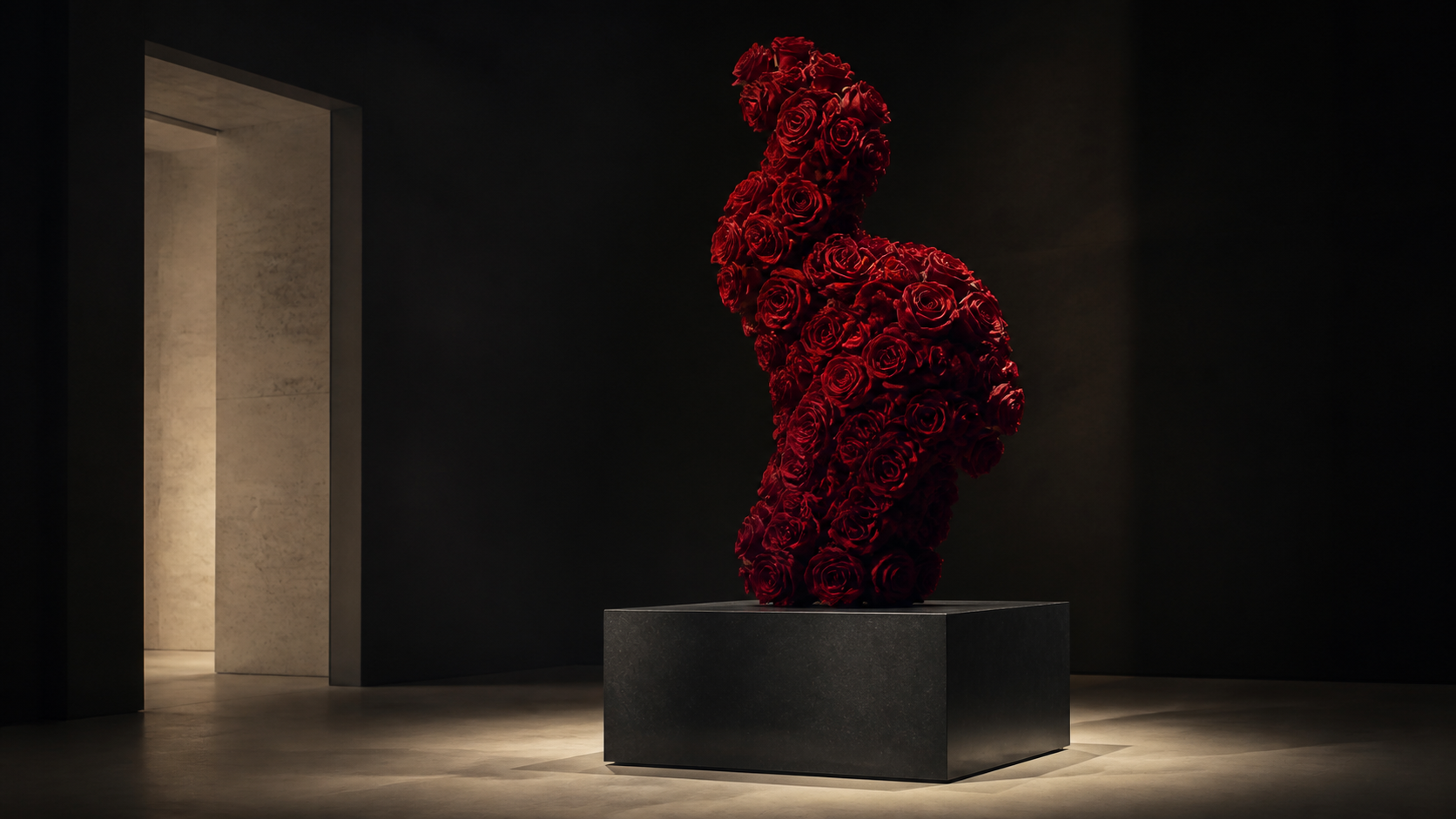
Floral sculpture in gallery light
Color and texture as visual language
A single rose color can create mass, while gradients and contrasts divide a form or reveal volume. Red may arrive with familiar emotional associations, but its artistic effect also depends on saturation, neighboring color, light, and scale. Symbolism is one layer of color—not its only function.
Texture operates across distance. From afar, dense roses form a continuous field. Up close, petal edges, centers, variation, and shadows become visible. Strong work controls the movement between those two readings.
Scale and sculpture
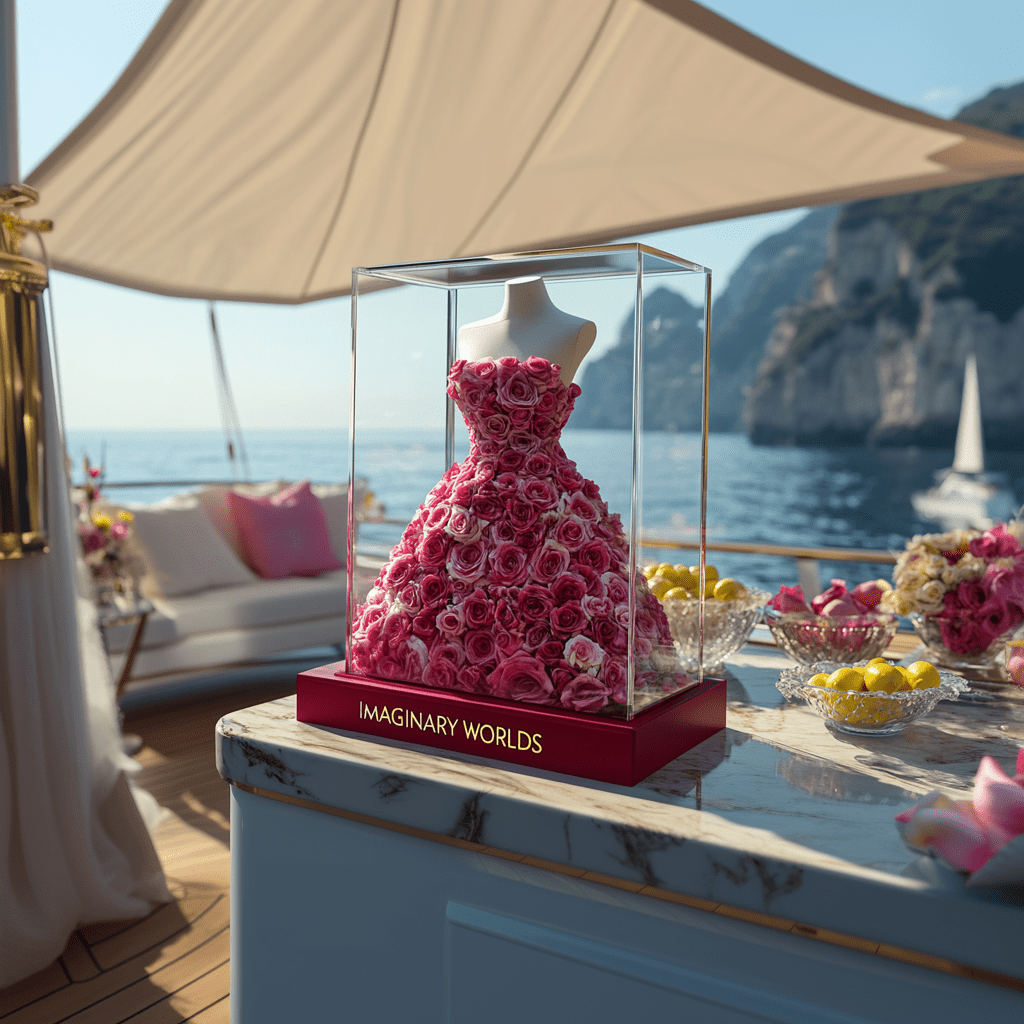
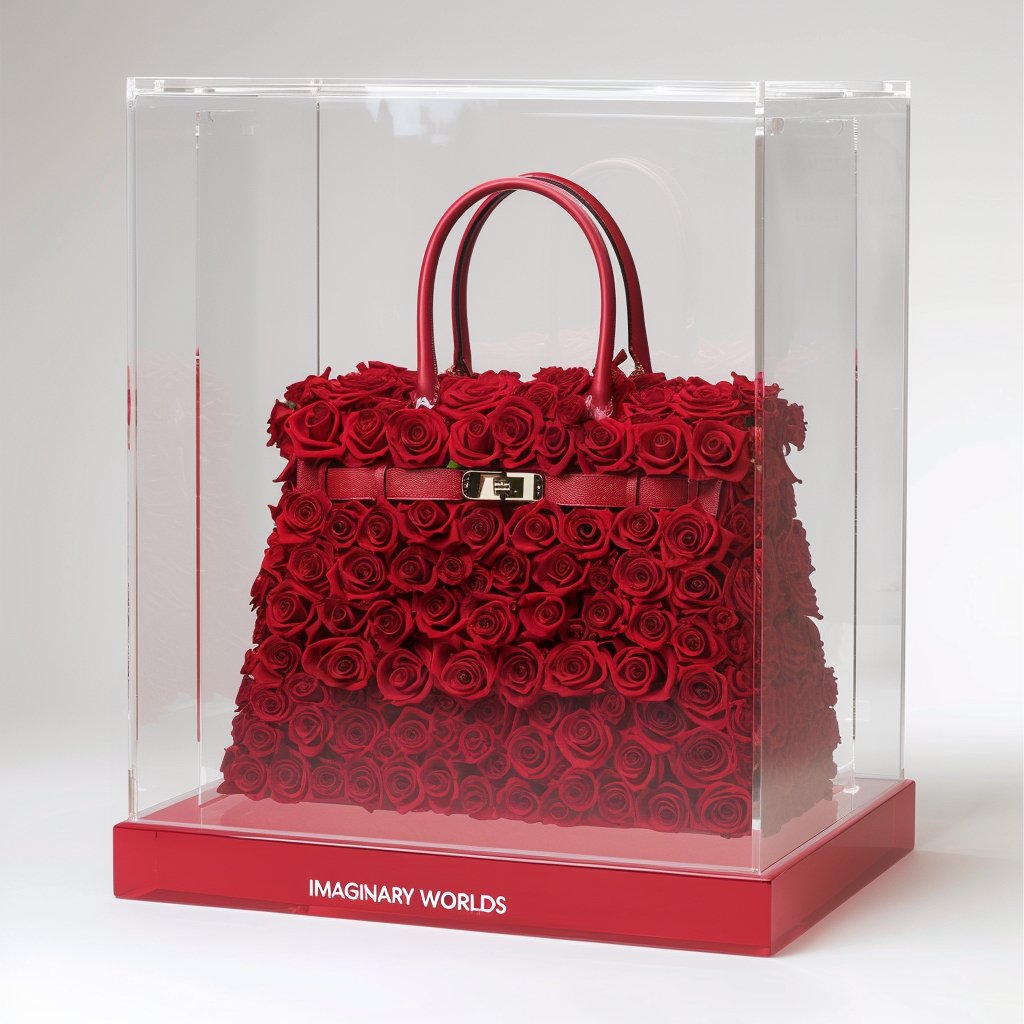
Changing scale changes the viewer's body in relation to flowers. A rose in the hand feels intimate. A bag-shaped floral object becomes collectible and uncanny. A dress at human scale suggests an absent wearer. A large arrangement or installation turns abundance into a spatial event.
Structure makes these transformations possible. Bases, armatures, enclosures, fastenings, and transport are not secondary engineering hidden behind the art; they determine silhouette and what the material can do.
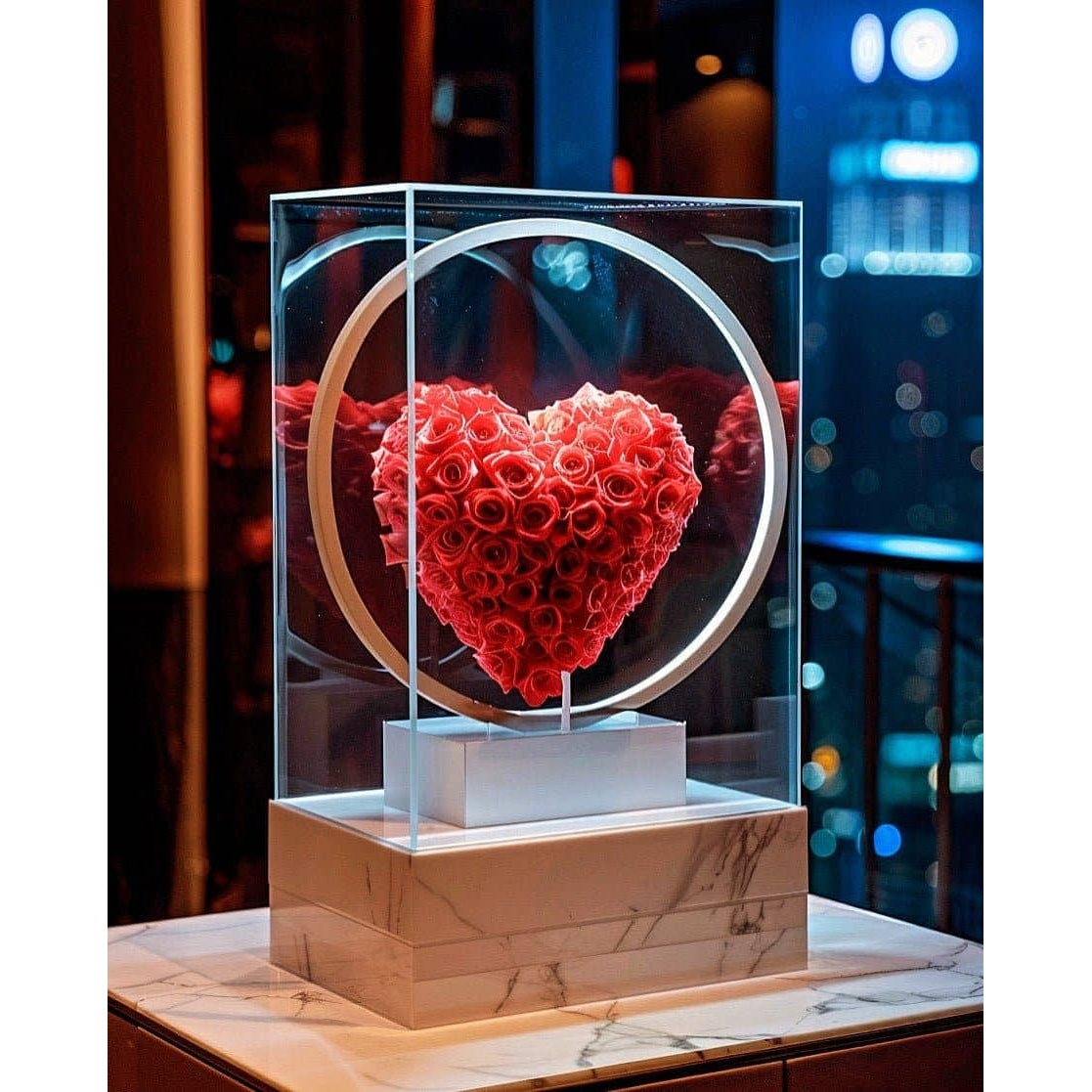
Rose light after darkRose Dress in a coastal settingCollectible floral formRed Ramo Buchón
Preservation and permanence
Preservation extends the time available to compose, display, photograph, and revisit a floral work. It supports stable surfaces and forms that are not designed to wilt within days. That duration can make the object behave more like collectible design.
It does not make the work permanent. Petals, dyes, supports, adhesives, and cases continue to age. This limit can deepen the work: a preserved flower occupies a middle state between living event and industrial object.
Design objects and emotional function
A lamp, memory box, dress, or bag form carries a use or cultural identity before roses are added. Floral transformation can reinforce, complicate, or sentimentalize that identity. An illuminated heart shapes atmosphere; a photograph makes a box archival; a dress silhouette brings fashion and the absent body into the reading.
Emotional purpose does not excuse weak composition. Meaning is strongest when material decisions demonstrate it—when preservation supports memory, light alters floral texture, or scale makes abundance physically felt.
The flower becomes more than subject matter when its material behavior helps carry the idea.
The IW floral art world
Imaginary Worlds works across The Light Collection, The Couture Collection, Floral Sculptures, and Ramo Buchón. Each tests a different proposition: atmosphere, garment-scale form, collectible identity, or abundance. These categories should not be treated as proof of art-world recognition, exhibition history, or critical consensus.
The credible claim is visible in the work itself. Preserved roses are being asked to form surfaces, occupy space, shape light, hold memory, and transform familiar objects. The next standard is documentation: original construction imagery, multiple views, real installation context, and transparent provenance that allow the viewer to evaluate those ideas more fully.