How a botanical material becomes surface, structure, color, light, and scale.
By Imaginary Worlds EditorialUpdated 2026-08-21
Floral Art · The IW Journal
Designing with preserved roses begins with a changed constraint. Fresh flowers are composed around hydration, stem behavior, opening, and a short display life. Preserved roses need no vase water and change more slowly, allowing the maker to plan a surface, silhouette, enclosure, or illuminated form that is intended to remain.
The medium is still botanical. No two blooms are mechanically identical, petals remain delicate, and treatment affects color and touch. Strong design works with that variation while giving it a deliberate order.
From flower to unit
One rose can be read botanically: center, petal edge, opening, and irregularity. Repeated roses behave differently. At a distance they merge into texture or color; close up they separate into individual blooms. The designer decides which reading should dominate.
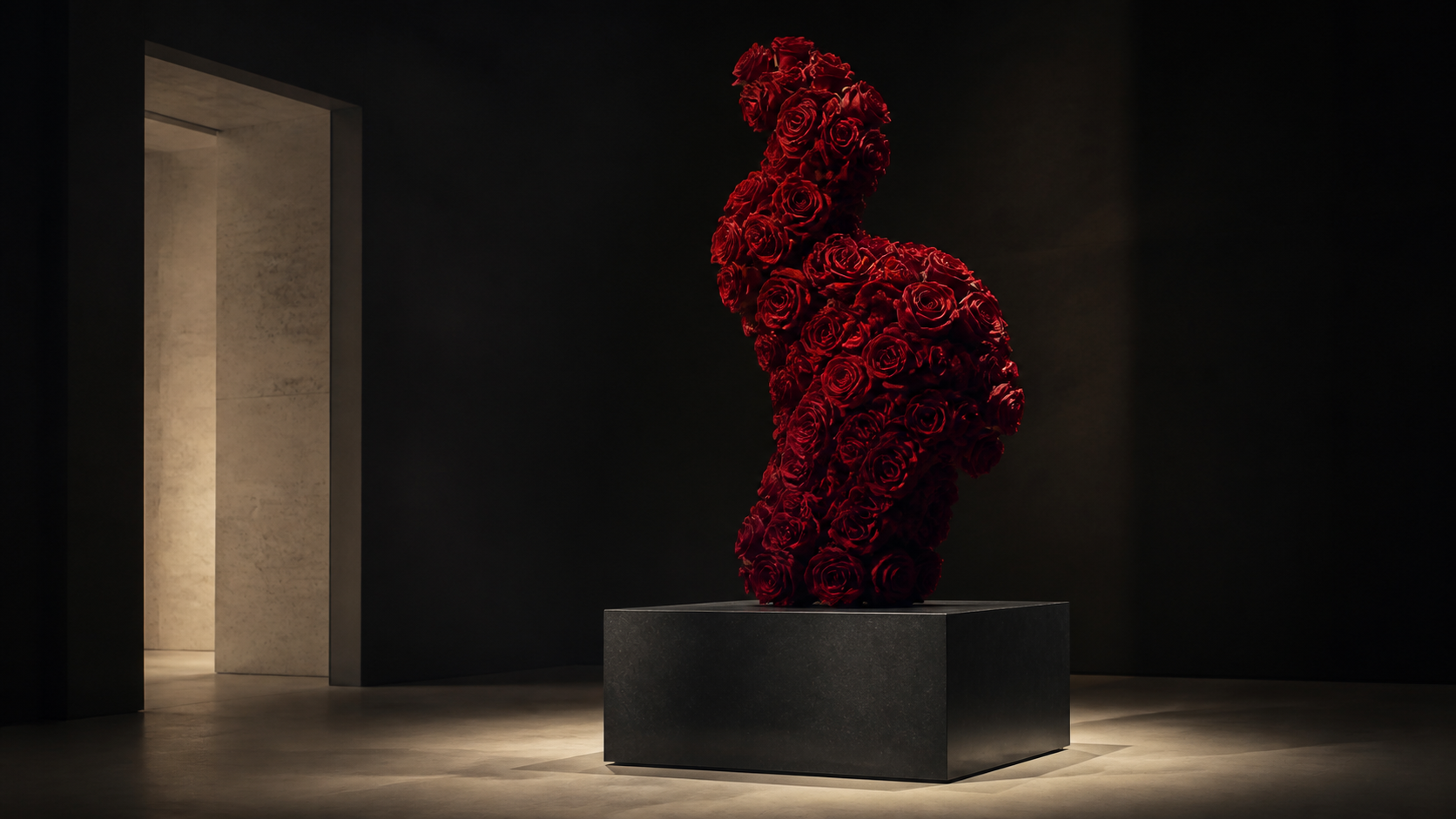
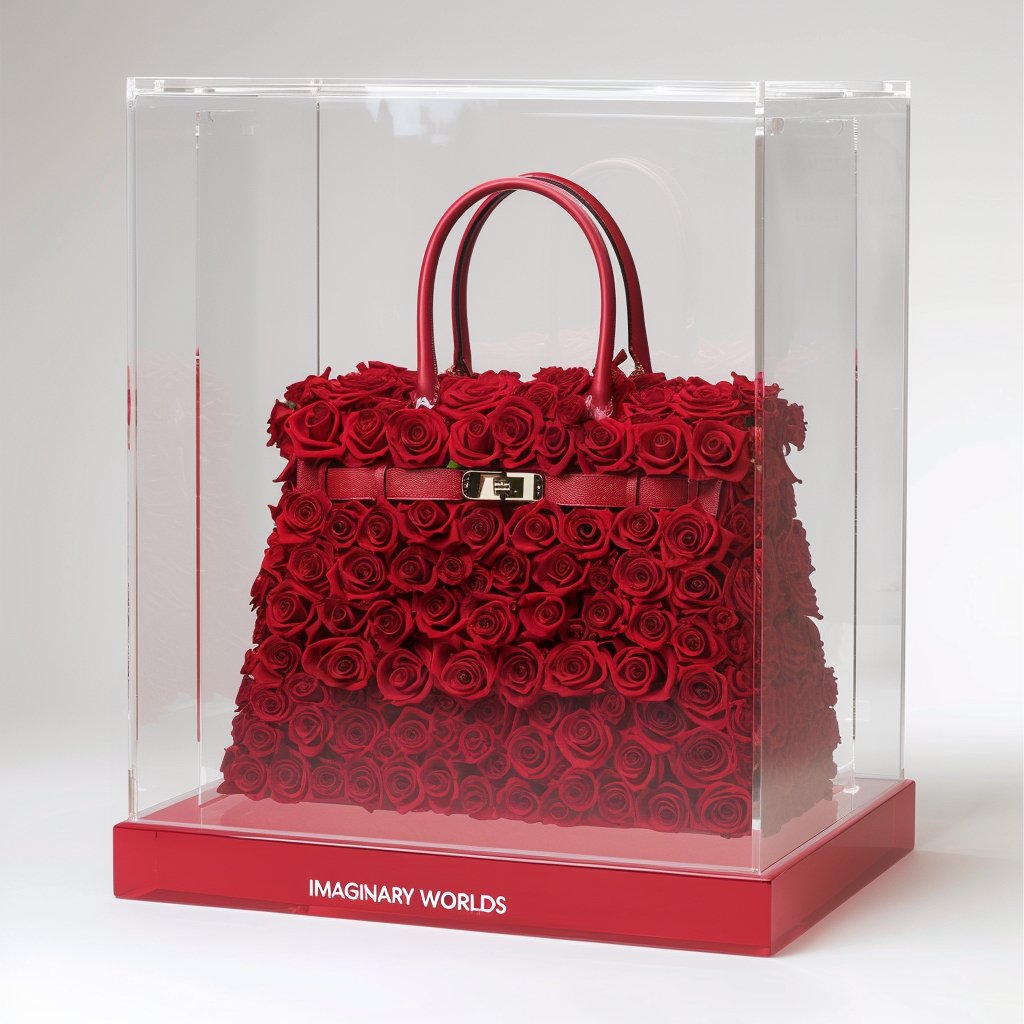
Tight repetition can create the continuous surface of a heart, bear, bag, letter, or dress. More open placement gives each bloom visual space. Neither density nor abundance guarantees quality. Rhythm, edge control, transitions, and the direction of each flower determine whether the whole feels composed.
The preserved-rose design vocabulary
Form
The underlying geometry establishes the silhouette before petal detail is seen.
Color
Monochrome creates mass and clarity; gradients, contrasts, and motifs direct attention or carry personal meaning.
Texture
Petal scale and bloom variation create a tactile field that can soften a strict structure.
A successful object resolves as a whole across the room and rewards inspection at close range.
Color is structure
In a preserved floral object, color does more than symbolize. It can describe volume, divide a surface, sharpen an edge, create an initial, or pull one region forward. A single saturated hue makes silhouette and texture dominant. A limited palette can show depth. Strong contrast can create a graphic sign across curved flowers.
Preservation also makes altered or uncommon rose colors possible, but the palette should remain accountable to the object. An unusual hue is not automatically meaningful; meaning emerges from its relationship to form, setting, and the person or idea represented.
Rose light after darkPersonal memory preserved with rosesCollectible floral form
Enclosure and memory
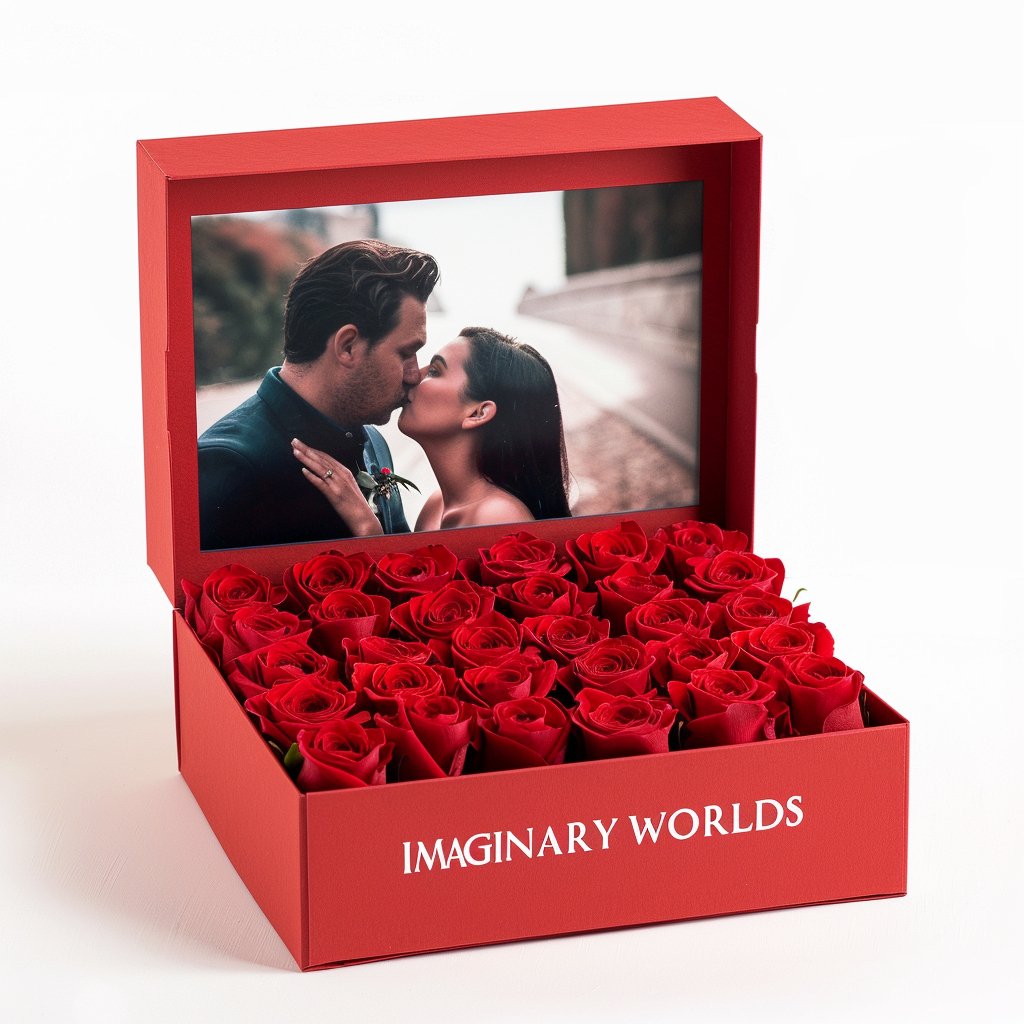
A box, acrylic case, or cabinet changes both care and meaning. Physically, enclosure can reduce dust and accidental contact while establishing a boundary around delicate material. Visually, it turns opening, viewing, and protecting into part of the experience.
In a memory object, a photograph or dedication is not decoration added after the flowers. It changes the hierarchy. The designer must decide whether the image, message, or rose field is encountered first and how the elements share space without competing.
Designing with light
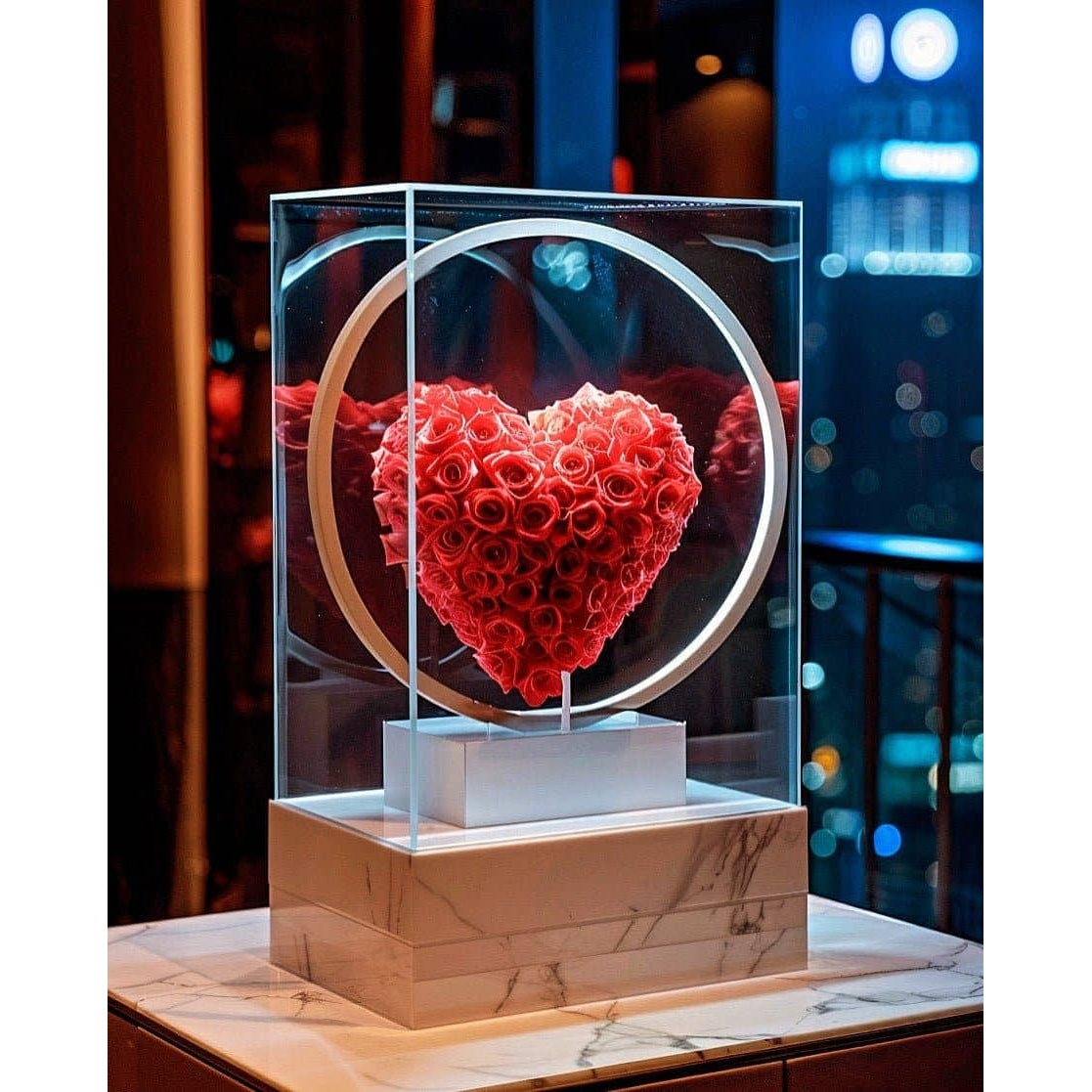
Illumination adds time and environment. By day, the object may be read through color and construction. At night, silhouette, shadow, reflected glow, and petal translucency become more prominent. Lighting therefore has to be considered with the floral surface, not attached as an afterthought.
Brightness, color temperature, heat, wiring, and access for service belong to the design problem. Claims about efficiency or component lifespan require verified specifications; visually, the key question is how the object shapes atmosphere in its intended room.
Scale changes construction
Small objects can be intimate and handled through a close visual register. At larger scale, weight, support, transport, edge definition, and the distance between viewer and surface become decisive. A rose dress or architectural sculpture must read as a silhouette before its thousands of floral decisions can be appreciated.
Scale also changes meaning. A flower held in the hand feels personal; a floral object at human scale can feel ceremonial, performative, or spatial. The design should earn its size through proportion and context rather than using quantity as a substitute for composition.
Preservation extends the design time of the flower; composition determines what that time is for.
A medium with limits
Preserved roses remain sensitive to humidity, sun, heat, dust, and touch. Adhesives, supports, lighting, acrylic, fabrics, and printed materials age on their own schedules. A responsible object is designed for care, repair where possible, and honest expectations rather than the fiction of permanence.
These limits are productive. They keep the rose visible as transformed nature rather than anonymous industrial texture. At Imaginary Worlds, the medium moves from private memory boxes to illuminated forms, collectible sculptures, and floral couture. The family resemblance lies not in one product format, but in a consistent question: how can emotion be given a clear physical form?