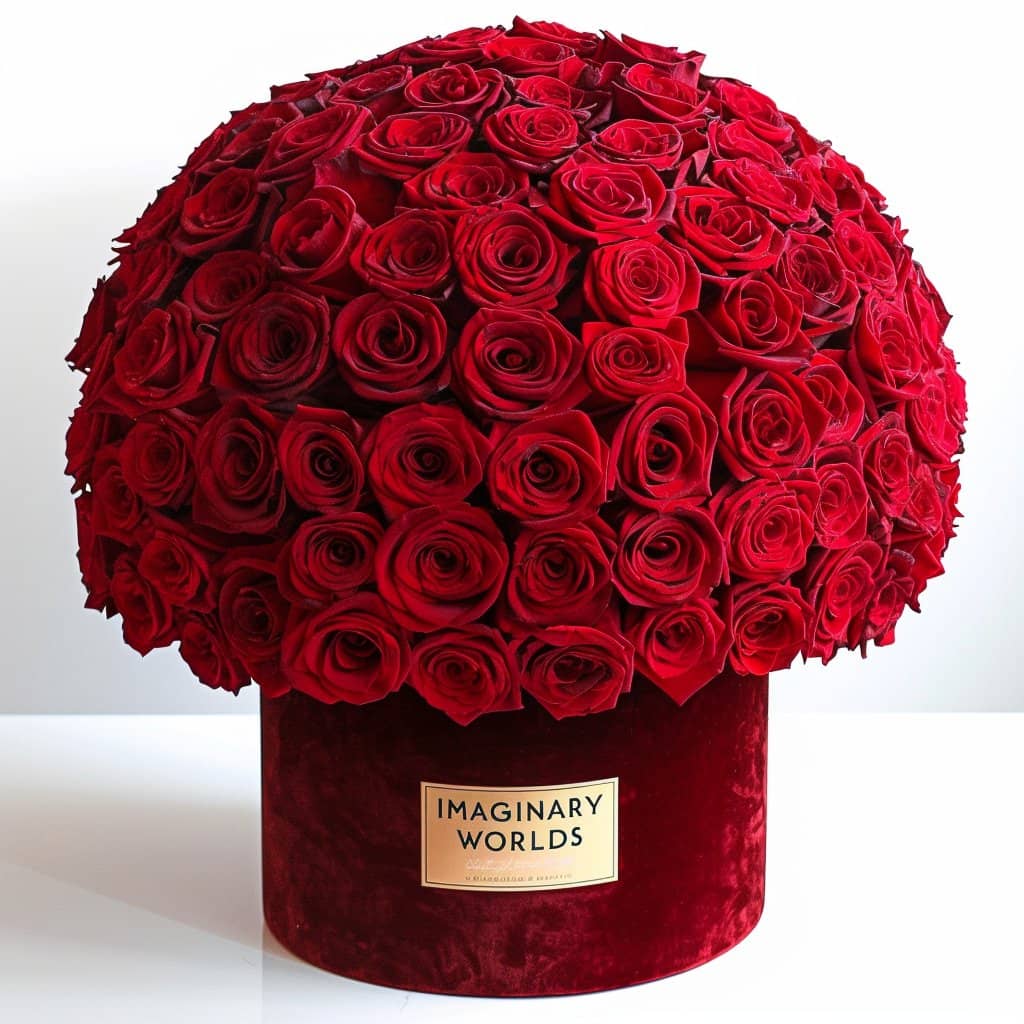
How one flower gathers different meanings through religion, art, ceremony, color, and personal memory.
By Imaginary Worlds Editorial
Culture · The IW Journal
The rose is not a symbol with one worldwide definition. Across periods and communities it has carried love, sacred devotion, beauty, martyrdom, secrecy, political identity, mourning, gratitude, and celebration. Color can change the message, but so can the occasion, the giver, the arrangement, and the story already shared by the recipient.
A responsible global guide therefore begins with layers of evidence. Documented traditions belong to particular histories. Popular modern interpretations describe conventions, not ancient truth. Personal symbolism belongs to the people using the flower now.
Why the rose carries so much meaning
Roses combine sensory appeal with contradiction. The flower is soft and fragrant; the plant can be thorned. The bloom is visually ordered yet short-lived. These qualities make it adaptable to stories about pleasure and pain, love and loss, innocence and desire, earthly beauty and sacred devotion.
Trade, cultivation, art, literature, religion, empire, advertising, and migration have carried rose imagery between cultures. Meanings have been translated and reworked rather than simply copied unchanged.
Sacred and historical roses
In European Christian art, the rose acquired several meanings. The Metropolitan Museum documents roses as emblems connected with the Virgin Mary, charity, chastity, divine love, martyrdom, and Christ's wounds. In classical and Renaissance imagery, roses could also accompany Venus and sensual or nuptial love. The same flower therefore served sacred and earthly narratives within related visual traditions.
Heraldry and political history added other readings. Red and white roses became emblems of allegiance in English historical memory, while the rose's thorned growth could suggest defense as well as beauty. These are specific European examples, not a universal history of the flower.
Three layers of rose meaning
Documented tradition
A meaning supported by historical objects, texts, rituals, or credible scholarship within a defined place and period.
Popular interpretation
A broadly circulated modern association—such as red roses with romance—that may be useful without being universal.
Personal symbolism
A meaning created by an individual relationship, memory, place, date, or private ritual.
Courtship and the language of flowers
European and American interest in floriography expanded during the nineteenth century, when manuals and illustrated cards presented flowers as coded messages. Roses became especially prominent in courtship and valentine imagery. Yet the guides did not agree: a white or yellow rose could carry very different definitions from one volume to another.
Modern gifting inherited that desire for a readable floral message, but contemporary meanings have also been shaped by cinema, retail, weddings, social media, and local custom. A code that feels obvious to one person may be unfamiliar or inappropriate to another.
Red Ramo Buchón
Color across contexts
Red is strongly associated with romantic love in much contemporary international gifting, but it can also communicate ceremony, sacrifice, power, celebration, or political identity. White appears in weddings, memorials, sacred imagery, and formal occasions. Yellow may suggest friendship and warmth today even though older European guides sometimes attached jealousy.
These variations make country-by-country color rules unreliable. Nations contain multiple religions, regions, languages, generations, and family practices. The principal rose-color guide offers a useful contemporary vocabulary, but cultural or ceremonial choices should be checked with people close to the specific tradition.
Gifting traditions are relational
The number of roses, presentation, timing, and public or private nature of a gift can matter as much as color. A large Ramo Buchón makes generosity and visibility part of the gesture. A single rose can feel direct and intimate. A rose kept with a photograph can become an archive rather than a declaration.
No arrangement automatically communicates respect. Meaning depends on whether the giver understands the recipient, occasion, and boundaries. That is particularly important across cultures, where a familiar romantic convention may not transfer cleanly.
Modern symbolic systems
Angel numbers, dates, initials, and personalized colors are contemporary ways of extending floral meaning. They are best understood as chosen symbolic frameworks rather than historical rose traditions or scientific truths. A 111 or 222 story may help someone name a beginning or relationship, while the rose gives that private idea a physical form.
Preserved roses change duration, not the meaning by themselves. Their usefulness lies in holding a selected color, photograph, or dedication beyond a single ceremony. The Memory Collection draws on that capacity without claiming one global interpretation.
The rose travels widely because it can carry meaning; it remains personal because no culture owns its final definition.
How to use symbolism responsibly
Ask three questions. What is documented about this tradition? What is merely a popular modern association? What does the recipient understand the symbol to mean? If a claim depends on an entire country's personality, an invented ancient custom, or a universal spiritual promise, it needs stronger evidence or should be removed.
Rose symbolism is richest when differences remain visible. The goal is not to flatten many histories into a global gift guide, but to notice how people repeatedly use one flower to make devotion, memory, identity, and change legible.